7 things to know before adopting an Irish wolfhound
Published in Cats & Dogs News
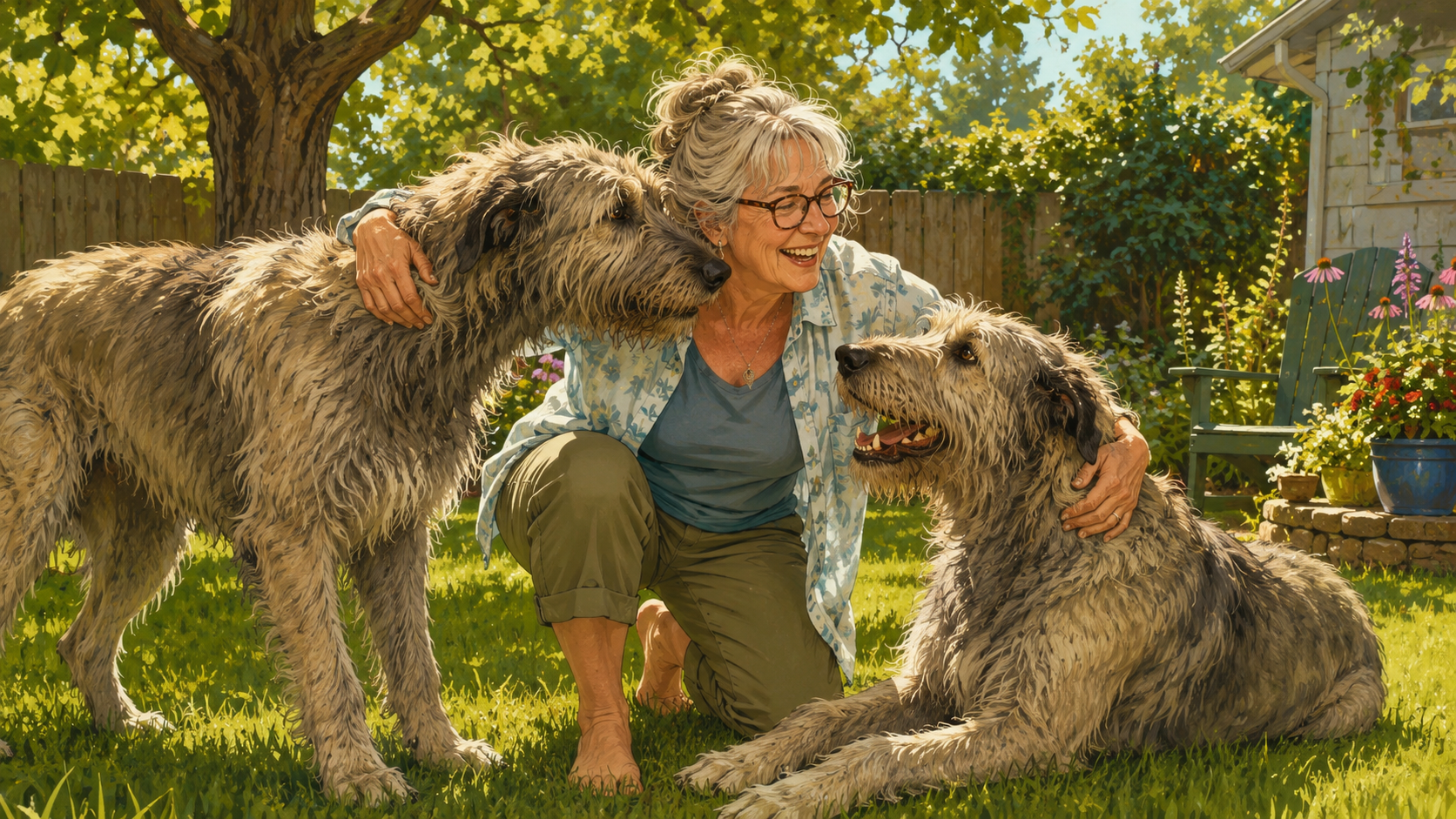
Irish wolfhounds are among the most striking dogs in the world. Their tremendous height, rough coats and calm expressions give them an almost mythical presence. Yet living with one is less like owning a legendary creature and more like sharing your home with an affectionate, oversized companion who needs thoughtful care.
Before adopting an Irish wolfhound, prospective owners should look beyond the breed’s beauty and understand the practical realities of its size, health, temperament and relatively short life expectancy.
1. They Are Truly Giant Dogs
Irish wolfhounds are not merely large. Adult males commonly stand at least 32 inches at the shoulder, while females are typically at least 30 inches tall. Many weigh well over 100 pounds.
Their height affects nearly every part of daily life. They can reach food left on counters, knock objects from tables with a wagging tail and occupy most of a sofa without trying. A standard dog bed may look like a throw pillow beneath them.
Owners need enough room for the dog to stretch out, turn comfortably and move safely through the home. A wolfhound may live successfully in a smaller house if given appropriate exercise, but cramped stairways, slippery floors and cluttered rooms can become difficult for such a long-legged animal.
Transportation also requires planning. A large sport utility vehicle, van or roomy hatchback may be necessary, particularly when the dog becomes elderly or injured and cannot climb easily.
2. Their Gentle Temperament Still Requires Training
Irish wolfhounds are generally known for being calm, affectionate and dignified. Many are friendly with visitors and devoted to their families. They are often described as gentle giants.
However, gentleness does not eliminate the need for training. A poorly mannered 15-pound dog can be annoying. A poorly mannered 140-pound dog can accidentally injure someone.
Early leash training is essential. Owners should teach the dog not to pull, jump on guests or rush through doorways. Basic commands such as “sit,” “stay,” “leave it” and “come” should begin while the puppy is still physically manageable.
Training should be patient and positive. Irish wolfhounds tend to be sensitive dogs and may shut down when handled harshly. They often respond better to encouragement, consistency and food rewards than to repetitive drilling or intimidation.
Socialization is equally important. Puppies should be introduced gradually to different people, surfaces, sounds, animals and environments.
3. Exercise Must Be Balanced Carefully
Irish wolfhounds need regular movement, but they are not built for endless high-impact exercise. Adults often enjoy long walks, relaxed exploration and brief opportunities to run in a safely enclosed area.
Growing puppies require special caution. Their bones and joints develop rapidly, and excessive forced exercise can place unnecessary stress on the body. Long-distance running, repeated jumping and strenuous hikes should wait until the dog has matured.
A young wolfhound may look physically enormous while still being developmentally immature. Owners should consult a veterinarian and experienced breeder or rescue organization about appropriate exercise at each stage.
A secure fence is strongly recommended. Irish wolfhounds were developed as sighthounds, and some retain a powerful instinct to chase rabbits, deer or other moving animals. Once focused on prey, they may travel farther and faster than an owner expects.
Electronic fencing is not always reliable for a determined sighthound and does not prevent other animals from entering the yard.
4. Health Care Can Be Complicated and Expensive
Giant breeds often face serious medical risks, and Irish wolfhounds are no exception. Conditions associated with the breed can include heart disease, bone cancer, joint problems and bloat.
Bloat, also called gastric dilatation-volvulus, is a life-threatening emergency in which the stomach fills with gas and may twist. Owners should learn the warning signs, including a swollen abdomen, restlessness, repeated unsuccessful attempts to vomit, heavy drooling and sudden distress.
Veterinary costs are often higher for giant dogs. Medication doses are larger, diagnostic procedures may require special equipment, and surgery can be more complicated. Even routine items such as flea prevention, heartworm medication and anesthesia may cost more because they are calculated according to body weight.
Pet insurance or a substantial emergency fund should be arranged before a crisis occurs. Owners should also locate an emergency veterinary hospital capable of treating a dog of this size.
5. Their Food Needs Quality, Not Just Quantity
Irish wolfhounds eat considerably more than small or medium-sized dogs, but simply providing large amounts of food is not enough. Growth must be controlled carefully, particularly during puppyhood.
A rapidly growing puppy should receive food formulated appropriately for large or giant breeds. Excess calories and improper mineral balance may contribute to orthopedic problems.
Owners should monitor body condition rather than assuming a giant dog should look bulky. A healthy wolfhound is typically lean beneath the rough coat, with a visible waist and ribs that can be felt without being sharply prominent.
Meals are often divided into two or more servings rather than one enormous portion. Owners should discuss feeding schedules, exercise around mealtimes and bloat prevention with their veterinarian.
The household budget must also account for larger food bags, durable feeding equipment and the possibility of prescription diets later in life.
6. Their Lifespan Is Painfully Short
One of the most difficult realities of Irish wolfhound ownership is the breed’s limited lifespan. Many live only six to eight years, though individual dogs may live longer.
Prospective owners must enter the relationship knowing that the dog may become elderly while still seeming young compared with smaller breeds. Age-related problems can appear early, and the transition from active adulthood to senior care may happen quickly.
This does not make the relationship less worthwhile, but it changes its emotional rhythm. Owners may have fewer years together and should be prepared to make thoughtful decisions about pain management, mobility and quality of life.
Adopting an adult or senior wolfhound can be especially rewarding, but it may also mean accepting an even shorter time together.
7. A Responsible Source Matters Enormously
Anyone seeking an Irish wolfhound should work with a responsible breeder or reputable rescue organization. Ethical breeders should discuss health testing, temperament, longevity within their bloodlines and the strengths and weaknesses of the breed.
They should ask prospective owners questions, provide veterinary records and remain available throughout the dog’s life. They should not treat the puppy as a luxury product or encourage buyers to choose primarily by color, size or appearance.
Rescue groups may have adult wolfhounds or wolfhound mixes needing homes. These organizations can often provide useful information about personality, compatibility with cats or dogs, and known medical needs.
Avoid impulsive purchases from online sellers, pet stores or breeders unwilling to provide documentation and references.
Irish wolfhounds can be extraordinary companions: affectionate, humorous, sensitive and deeply memorable. They are also expensive, space-consuming and medically vulnerable. The right home is one that embraces both sides of the breed — the majestic appearance and the very real responsibility.
========
Marian Holloway writes about companion animals, humane care and the practical realities behind popular breeds. She believes the best adoptions begin with honest expectations, patience and a willingness to shape daily life around an animal’s needs. This article was written, in part, utilizing AI tools.








Comments