The hippie/boho aesthetic, from flowing layers to earthy footwear
Published in Fashion Daily News
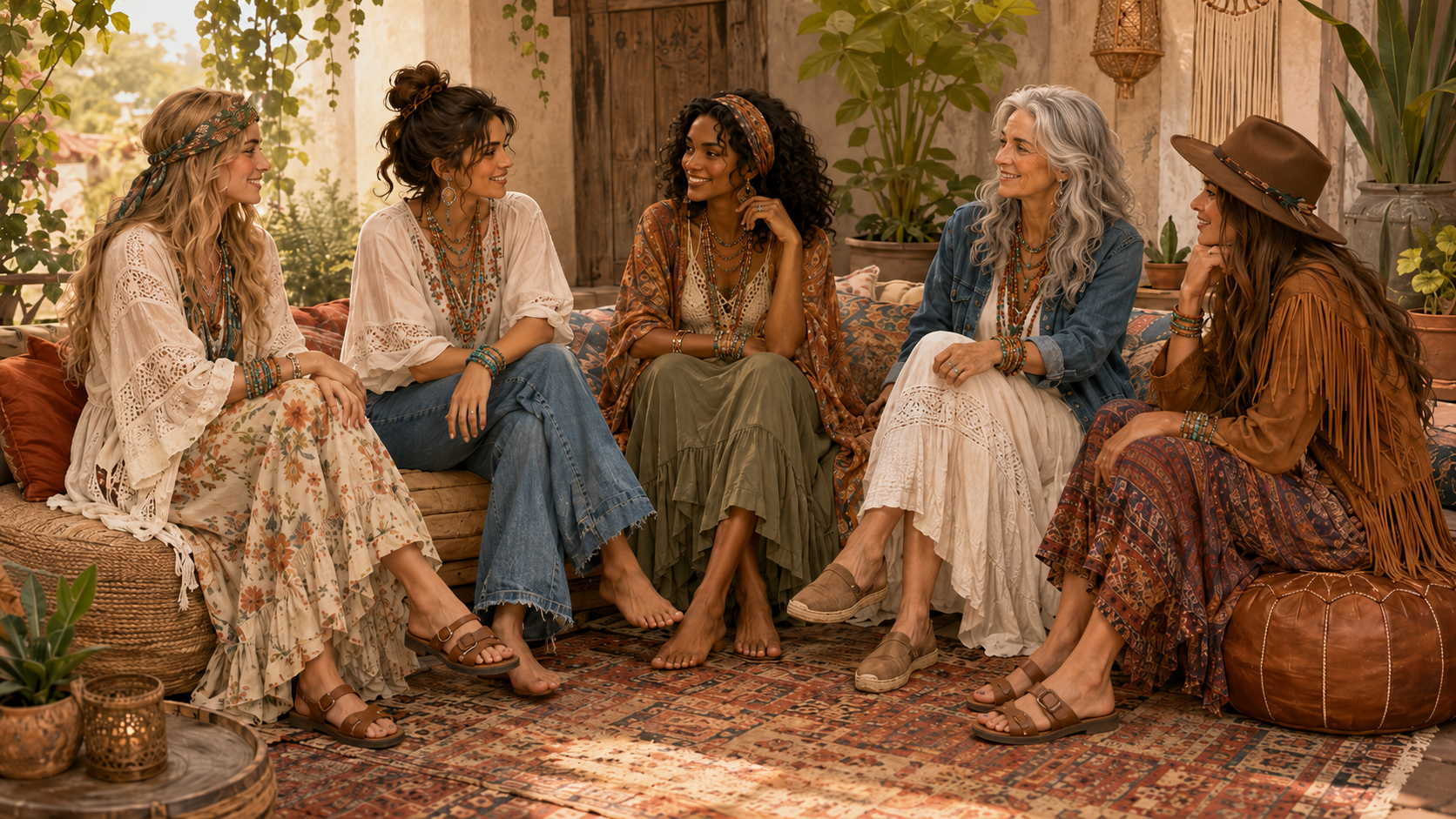
The hippie and boho aesthetic has lasted because it is less about one strict look than a mood: relaxed, artistic, slightly undone and deeply personal. It borrows from music festivals, vintage shops, beach towns, desert markets, folk art, handmade clothing and the idea that comfort can still have drama.
At its best, the style feels collected rather than coordinated. A gauzy blouse, a tiered skirt, a faded denim jacket, a crochet vest, a slouchy bag and a pair of well-worn sandals can say more than a perfect matching outfit. The look welcomes texture, pattern and age. It likes cotton, linen, suede, leather, denim, fringe, embroidery, patchwork and pieces that seem to have stories.
Footwear is a major part of the effect. The wrong shoes can make a boho outfit look like a costume or a department store display. The right shoes make it feel grounded, practical and lived in.
The roots of the look
The hippie style that became famous in the 1960s and 1970s grew out of youth culture, antiwar politics, music festivals, handmade clothing and a rejection of polished, formal fashion. It embraced jeans, peasant blouses, long skirts, sandals, beads, headscarves and thrifted layers.
Boho, short for bohemian, is a broader cousin. It draws from artists, travelers, vintage clothing, global textiles and free-spirited dressing. Modern boho may be less political and more decorative than its hippie ancestor, but the two aesthetics overlap constantly.
The shared idea is freedom. Clothes should move. Hair can be loose. Fabrics can wrinkle. Shoes should allow wandering.
Start with natural materials
A boho wardrobe usually works best when it leans into natural materials. Cotton, linen, leather, suede, canvas, cork, raffia and wool all fit the mood. They age well and look better when they are not too perfect.
That does not mean every item must be expensive or handmade. A simple cotton dress, a canvas tote and leather sandals can carry the look easily. So can jeans, a loose top and clogs. What matters is the sense of ease.
Synthetic shine can fight the aesthetic unless used carefully. Boho generally prefers matte, soft and weathered textures over slick, glossy finishes.
Sandals are the classic choice
If there is one essential boho shoe, it is the sandal. Flat leather sandals, fisherman sandals, huaraches, gladiator sandals and simple slides all work well with the look.
A brown leather sandal with a worn-in finish may be the most versatile option. It pairs with wide-leg pants, sundresses, cutoffs, linen trousers and long skirts. Black sandals can feel a bit more urban or dramatic, while tan, cognac and natural leather tones lean warmer and more earthy.
For a more retro hippie feel, look for sandals with thick straps, woven leather or cork soles. For a more delicate boho look, thin straps can work, but avoid anything too dainty if the rest of the outfit is loose and substantial.
Clogs bring the folk-art feeling
Clogs are one of the most underrated boho footwear choices. They have a practical, handmade quality that fits beautifully with denim, peasant skirts, prairie dresses and cropped pants.
Wooden-soled clogs can add height without looking too polished. Suede or leather uppers feel especially right, particularly in brown, rust, black, olive, cream or deep red. Clogs also work across seasons. In spring and summer, they can be worn barefoot. In fall, they pair well with textured socks and longer skirts.
The key is balance. Since clogs can be visually heavy, they often look best with flowing fabrics, wide hems or cropped pants that show the ankle.
Boots add edge and usefulness
Boho does not always mean sandals. Boots are essential, especially for cooler weather or festival settings.
Ankle boots in suede or leather are the easiest option. They work with dresses, jeans, skirts and loose trousers. Western boots, harness boots and lace-up boots can all fit, depending on the mood. A soft suede boot suggests desert boho. A scuffed leather boot adds a tougher, road-worn feeling.
Tall boots can be striking with short dresses or long skirts with movement, but they should not look too corporate. Avoid overly sleek office boots. The boho boot should look like it belongs at a concert, a market, a cabin or a roadside diner.
Espadrilles keep it summery
Espadrilles are ideal for a softer summer version of boho style. Their rope soles and canvas uppers feel casual, beachy and natural.
Flat espadrilles can work with sundresses, linen pants and cropped jeans. Wedge espadrilles add height while still looking relaxed, especially with long skirts or breezy dresses. They are dressier than flip-flops but less formal than heels.
Cream, navy, black, rust, olive and faded stripes all fit the mood. The best espadrilles look sunny and easy, not precious.
Sneakers can work if they are simple
Sneakers may not be the first thing people think of with hippie or boho style, but they can work. The trick is to keep them simple and low-key.
Canvas sneakers, slip-ons and retro low-tops pair well with jeans, overalls, loose dresses and casual skirts. White sneakers can be useful, though they may feel too crisp if the rest of the outfit is earthy. Off-white, faded black, mustard, olive or denim-colored sneakers often blend better.
Athletic running shoes are harder to make boho unless the look is intentionally sporty. A chunky modern sneaker can clash with the handmade, vintage feeling of the style.
Flip-flops are casual, but limited
Flip-flops fit beachy hippie style, but they can also make an outfit look unfinished. They are fine for the pool, porch, beach, campground or quick errands, but they rarely add much to a full boho look.
Leather flip-flops are a stronger choice than rubber ones. They feel more grown-up and pair better with dresses and linen. Still, for most outfits, a proper sandal does more work.
The goal is casual, not careless.
Barefoot belongs in the aesthetic
The hippie and boho world has always had a natural connection to bare feet. Beach houses, backyards, porches, music festivals, yoga rooms and cozy homes all make barefoot style feel natural rather than staged.
In real life, bare feet make sense in the right setting. At home, they can make a flowing skirt, loose pants or a soft cotton dress look even more relaxed. In photos, bare feet can instantly make a scene feel warmer and more human.
But barefoot is not always practical or safe. Streets, public bathrooms, hot pavement, rough trails and crowded events call for shoes. The look may romanticize freedom, but common sense still matters.
Keep jewelry secondary
Boho style often includes jewelry, but it should not overpower the outfit. Rings, bangles, pendants, beads and earrings can all fit. Anklets can work, too, but they do not need to be the point.
The stronger approach is to let footwear, fabric and silhouette carry the look. A good sandal, clog or boot often says more than a stack of accessories. If anklets are used, keep them casual: a simple chain, a cord, a bead or a small charm. Too much ornament can make the style feel forced.
Boho should look discovered, not assembled from a checklist.
Let comfort lead
The best hippie and boho outfits have movement. They allow sitting on the floor, walking through a market, cooking at home, dancing at a show or wandering outside at sunset. Shoes should support that same feeling.
A person should be able to move naturally in the clothes and footwear. If the sandals pinch, the boots are too stiff or the wedges make every step a calculation, the look loses its spirit.
The hippie and boho aesthetic is not about dressing like someone else’s idea of a free spirit. It is about finding the pieces that feel easy, expressive and a little personal. A soft blouse, worn jeans, a long skirt, a faded scarf, leather sandals, old clogs or scuffed boots can all do the job.
The result should feel comfortable before it feels fashionable. That is the heart of the style: grounded, relaxed, creative and ready to go wherever the day wanders.
========
Vera Larkspur writes about fashion, home style and the everyday details that make personal style feel natural. She has a fondness for vintage denim, practical sandals and clothes that look better after a little living. This article was written, in part, utilizing AI tools.






Comments